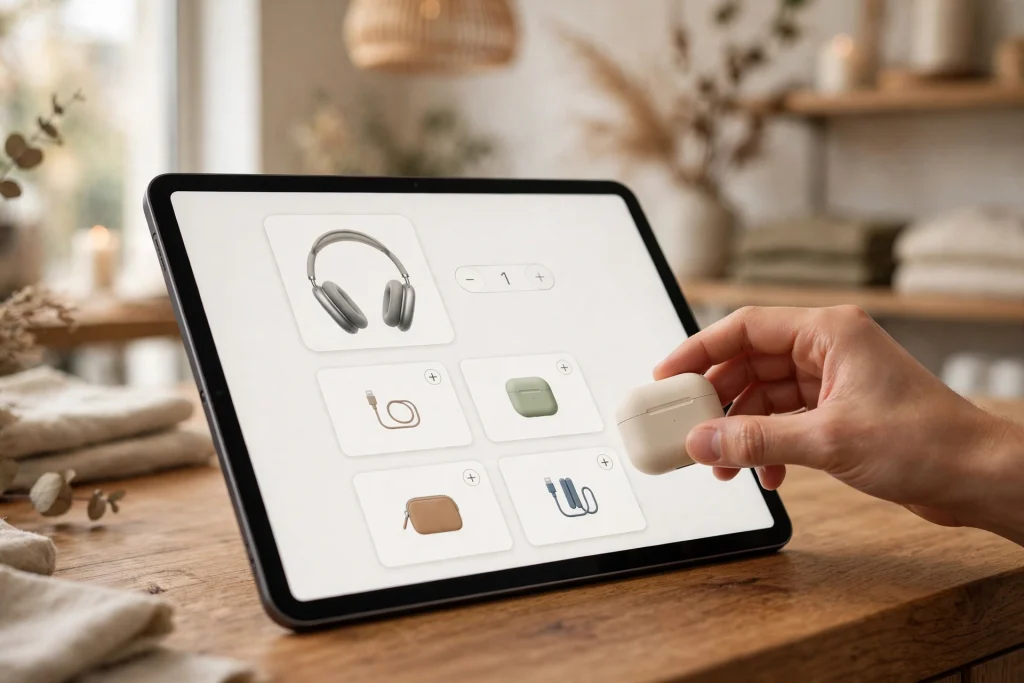
Some of the most efficient revenue in e-commerce comes from customers who are already about to buy. They have made the decision. Their card is out. Adding one more item to their order costs you almost nothing in marketing and produces immediate revenue. The businesses that do this well see meaningful lifts in average order value. The businesses that do it poorly annoy their customers and lose sales that were about to close.
The gap between good and bad here comes down to relevance and respect. Suggestions that genuinely serve the customer produce sales and satisfaction. Suggestions that feel like extraction produce resistance and lost trust.
This piece covers what upselling and cross-selling are, where to place them, and how to grow order values without wrecking the customer relationship in the process.
The Two Approaches Explained
Same idea, different execution.
Upselling Defined
Offering a better version of what the customer is already considering. A higher tier. More features. Premium option.
Cross-Selling Defined
Offering complementary products alongside what they are buying. Related items that work with their choice.
Where They Differ
Upselling upgrades the same purchase. Cross-selling adds different items to the order.
When Both Serve the Customer
Done well, both are helpful. The customer gets a better product or a more complete solution.
When Both Hurt
Done poorly, both feel pushy. Trust erodes and future purchases go elsewhere.
The Judgment Call
Every suggestion has to pass the test of actually being useful to the specific customer at that specific moment.
Why This Matters for Revenue
The economics are compelling.
Higher Average Order Value
Direct effect on revenue per order. Adds up quickly.
Better Margins on Add-Ons
Accessories and premium versions often carry better margins than base products.
No Additional Acquisition Cost
You already paid to bring the customer in. Additional revenue from them comes with no extra acquisition spend.
Compound Impact
A small percentage lift in AOV, applied across all orders, produces meaningful annual revenue.
Customer Experience Wins Too
The right suggestions actually help. A customer who bought a printer without ink because you did not suggest ink is not better served by minimalism.
Return Rate Benefits
Complete purchases sometimes have lower return rates than incomplete ones. The customer got what they actually needed.
Where to Place Suggestions
Location matters a lot.
Product Pages
Frequently bought together. Similar products. Suggestions near the buy button.
Cart Pages
The customer decided to buy. Adding to the order is a small next step.
During Checkout
Delicate territory. Small additions work. Big distractions cause abandonment.
Post-Purchase Confirmation
Suggestions after the sale for the next order.
Follow-Up Emails
Cross-sell suggestions in the post-purchase email series. Reorder reminders for consumables.
Homepage & Category Pages
Bestsellers and personalized picks throughout the site.
Product Page Recommendations
Where most work happens.
Related Products
Alternatives the customer might prefer. Different but similar.
Complementary Products
Items that work with what they are viewing.
Frequently Bought Together
Products often purchased with this one. Amazon made this pattern familiar.
Recently Viewed
Products they already looked at. Reminder without pressure.
Placement Style
Usually below the main product content. Or in a sidebar. Not competing with the primary product.
How Many to Show
Three to six is typical. More than that overwhelms.
Cart Page Suggestions
High conversion location.
Complete Your Order
Suggestions to round out the purchase. Related accessories or complements.
Frequent Additions
Products commonly added when this type of purchase happens.
Free Shipping Encouragement
If they are close to a threshold, suggest items that would qualify them.
Cart Content Analysis
Suggestions based on what they have already added.
Not Overwhelming Checkout
The path to checkout still has to be clear. Suggestions add value without stealing focus.
Test Different Placements
Above the summary, below the summary, in a sidebar. Different placements produce different results.
Checkout Suggestions
The delicate zone.
Order Bumps
Small one-click additions. Extended warranties, gift wrapping, small accessories.
Shipping Upgrades
Expedited shipping as an option. Simple upsell that customers often want.
Add-Ons That Complete
Batteries for a battery-powered item. Refills for a system. Real completions.
Watch the Balance
Aggressive checkout selling causes abandonment. The whole exercise is worthless if it kills the base order.
One-Click Add
Anything you suggest during checkout has to be one click. Any friction breaks the flow.
Post-Purchase Opportunities
Often underutilized.
Confirmation Page Recommendations
The customer just bought. Now what else might they want?
Same-Order Additions
Some stores allow adding to a recent order for a short window. Extends the shipment.
Email Follow-Ups
Related products in the post-purchase email series.
Reorder Timing
For consumables, reminders as the product would be running out.
First-Time Buyer Nurturing
Introducing the broader catalog to someone who only knows one product.
Types of Recommendations
Different logic for different situations.
Algorithmic Based on Behavior
What similar customers bought. Machine learning finds patterns humans miss.
Curated by Category
Hand-picked recommendations that make sense together. Editorial approach.
Purchase History Based
For returning customers, recommendations informed by what they already bought.
Browse History Based
Based on what they viewed in the current session or previous visits.
Same Category
Products from the same category as the one being viewed.
Same Brand
Products from the same brand or line.
Preset Bundles
Product combinations designed to work together.
Personalization at Scale
The advanced version.
Individual Preferences
Different suggestions for different customers based on their patterns.
Behavioral Data Inputs
Purchase history, browsing history, cart activity, engagement.
AI-Powered Recommendation Engines
Modern e-commerce platforms use AI to personalize continuously. Better than static rules.
Cross-Session Learning
Building a preference profile over time. Suggestions get smarter as you know the customer better.
The Balance
Enough personalization to be useful. Not so much that it feels like surveillance.
New Customer Fallback
For customers without history, fallback to bestsellers and category leaders.
Bundling Strategies
Grouped selling.
Static Bundles
Predefined combinations. Camera plus lens plus case. Standard bundle at a bundle price.
Dynamic Bundles
System-generated bundles based on cart contents.
Bundle Discounts
Small discount for buying the bundle. Motivates the larger purchase.
Build-Your-Own
Customer picks from options. Discount for buying multiple. Feels less like a hard sell.
Starter Kits
Everything a new user needs. Great for categories with a learning curve.
Cross-Category Bundles
Complete setups that span categories. More sophisticated bundling.
What Makes Suggestions Actually Work
Beyond just placing them.
Relevance Above All
The suggestion has to make sense for what the customer is doing. Random products fail.
Clear Value
Why should they add this? The value has to be obvious in a glance.
Great Presentation
Same photo quality and description quality as your main products. Neglected recommendation slots hurt more than they help.
Easy to Add
One click. No friction between wanting the item and having it in the cart.
Not Overwhelming
Enough options to have choice. Not so many that decision paralysis sets in.
Mobile-Friendly
Recommendations that work on small screens where most purchases now happen.
Regular Testing
What works changes over time. Testing keeps recommendations effective.
Common Mistakes
Where stores get this wrong.
Overloading the Product Page
Twenty recommendation slots on a product page overwhelms and distracts from the sale itself.
Irrelevant Suggestions
Random products with no connection to what the customer is looking at. Confuses and annoys.
Poor Placement
Suggestions buried where nobody sees them. Missed opportunity.
Weak Photos on Recommendation Slots
Great product photos on the main product. Blurry ones on recommendations. Inconsistent quality signals neglect.
Complicated Add Process
More than one click to add a recommendation. Friction kills conversion.
Aggressive Checkout Selling
Pushing hard during checkout produces abandonment. The lift on cross-sells does not compensate.
Same Recommendations for Everyone
No personalization. Missed relevance.
Wrong Timing
Suggestions after checkout completed. After they already committed.
Mobile Neglect
Desktop-optimized recommendations that break on mobile. Where most orders happen.
The Tools Available
Technology that helps.
Platform Native Features
Shopify, WooCommerce, and others have basic recommendation features built in.
Recommendation Apps
Klaviyo, Rebuy, LimeSpot, and similar tools provide sophisticated engines.
AI-Powered Systems
Machine learning that continuously optimizes what to show.
A/B Testing Tools
Test different approaches. See what works for your specific customers.
Analytics Integration
Understand which recommendations produce revenue and which do not.
Bundle Builders
Specific tools for creating and managing bundle offers.
Measuring What Works
Track the impact.
Average Order Value Trend
Are recommendations lifting AOV over time?
Attach Rate
Percentage of orders that include a recommended item. Direct measure.
Revenue From Recommendations
How much revenue is attributable to the recommendation system.
Conversion Rate Effects
Recommendations should not hurt overall conversion. If they do, something is wrong.
Bundle Performance
Which bundles convert. Which do not.
Customer Lifetime Value Changes
Customers who receive good recommendations often have higher lifetime value.
Category-Specific Approaches
Different products, different strategies.
Fashion
Complete the look. Accessories. Complementary pieces. Style-based recommendations.
Electronics
Necessary accessories. Compatible products. Extended warranties.
Beauty
Complete routines. Product families. Sample additions.
Home Goods
Room completions. Coordinated pieces. Similar style items.
Food & Consumables
Pairings. Meal solutions. Reorder emphasis.
Sports & Outdoors
Complete setups. Skill-appropriate additions. Related activity gear.
Books & Media
Same author. Related topics. Series completions.
The Customer Perspective
Remember who this is for.
Helpful, Not Pushy
Recommendations should feel like a friend suggesting something you might like. Not a salesperson working for commission.
Real Value
The suggestions actually help the customer accomplish what they came to do.
Discovery
Good recommendations introduce customers to things they would not have found on their own.
Complete Solutions
Helping them get everything they need. Better than realizing later they should have added something.
Long-Term Trust
Customers who feel taken care of come back. Customers who feel manipulated do not.
Pulling It All Together
Upselling and cross-selling represent significant revenue opportunities that many stores underutilize. Done thoughtfully, they lift order values while actually serving customers better. Done poorly, they annoy customers and damage the trust that supports repeat business.
For most stores, thoughtful recommendation systems produce measurable revenue gains. The tools are affordable. The techniques are documented. The returns are consistent.
For stores not running systematic recommendations, adding them produces immediate results. Basic related products on product pages, cart-page suggestions, and post-purchase recommendations alone move the needle meaningfully.
For stores running basic recommendations, adding personalization produces additional gains. Individual preferences drive higher relevance. Higher relevance drives higher conversion.
For stores with sophisticated systems, ongoing testing and refinement produces continued returns. The work is never finished, but the compounding is real.
The principle to hold onto is that recommendations should serve customers first. When they do, they also serve the business. When they only serve the business, they eventually stop serving the business either, because customers pick up on the extraction and leave.
The tools have matured to where sophisticated personalization is accessible to stores of most sizes. The bottleneck is usually not technology. It is the willingness to invest in the thinking and testing that makes recommendations actually good rather than just present.
Different customer segments respond to different approaches. Testing reveals what works for your specific customers on your specific products. General best practices help. Testing on your own data confirms.
The compound effect over time is substantial. Every order lifted by even small amounts adds up across thousands or millions of orders. Businesses that build strong recommendation systems over years develop competitive advantages competitors struggle to match.
For customers considering purchases at your store, useful recommendations help them accomplish what they came to do. Buying a camera without knowing to buy a memory card, a case, and a strap is a worse customer experience than buying with those suggestions surfaced. Serving the customer well and lifting order value are not in opposition when the recommendations are actually good.
For customers who feel pushed by aggressive recommendations, the damage is real. They resent the experience. They shop elsewhere next time. The short-term revenue lift does not compensate for the long-term customer loss.
The businesses that master customer-centric recommendation strategies build sustainable competitive advantage. Their per-order revenue is higher. Their customer relationships are stronger. Their growth is more sustainable. The pattern is consistent across categories and store sizes.
Take upselling and cross-selling seriously as strategic revenue drivers grounded in customer service. The right recommendations serve everyone. The wrong ones cost more than they gain. Build systems that pass the test of actual helpfulness, invest in the personalization that makes them relevant, and keep testing over time to refine what works. The results appear in average order value, customer satisfaction, and repeat purchase rates that support continued growth across every other function of the business.
For stores building this capability, start with the basics. Product page recommendations. Cart page suggestions. Post-purchase follow-ups. Get these working well before adding more sophisticated layers. For stores that already have the basics working, personalization is the next major opportunity. And for stores with strong personalization in place, ongoing refinement continues producing marginal gains that stack into significant returns over years. The work rewards patience and consistent attention, and the returns keep coming long after the initial investment is made.