Choosing a content management system is one of the more consequential decisions in setting up a business website. The platform affects almost everything about how your site exists. Costs. Features. Team workflow. Growth potential. Long-term flexibility. Getting the choice right at the start prevents years of friction that would follow a poor choice.
The market has more good options than ever. WordPress, Shopify, Squarespace, Webflow, Wix, Ghost, and many others all have their place. But this abundance of options makes choosing harder, not easier. Without a framework for deciding, businesses often choose based on marketing or trend rather than fit.
This piece provides a framework for choosing a CMS that actually fits your business needs.
Start With Your Actual Requirements
Before evaluating platforms, understand what you need.
Site Purpose
What is this site for? Marketing? E-commerce? Content publishing? Community? Something else?
The primary purpose drives everything else.
Content Types
What kinds of content will the site have? Blog posts? Products? Portfolios? Team members? Events? Case studies?
Different platforms handle different content types with different levels of capability.
Team Capabilities
Who will build and maintain the site? Designers? Developers? Content managers? Non-technical business owners?
The platform must match team capabilities.
Traffic Expectations
How much traffic do you expect? Small local business? Growing mid-market brand? High-volume publication?
Traffic requirements affect platform choice and hosting needs.
Growth Trajectory
Where do you expect the site to be in three years? Five years? The platform should support that growth.
Budget
Realistic budget for platform, development, and ongoing costs.
Timeline
When does the site need to launch? Some platforms enable faster launches than others.
The Ten Questions to Ask
Structured evaluation.
Question 1: What Does the Site Actually Need to Do?
List the specific functions the site must provide. Contact forms. Blog. Products for sale. Portfolio. Membership. Whatever applies.
Different platforms handle different functions with different levels of capability.
Question 2: Who Will Build It?
Designer? Developer? Non-technical business owner? Agency?
The builder’s skill set constrains platform options. Non-designers should not use Webflow. Non-developers should not use Drupal.
Question 3: Who Will Maintain It?
Ongoing maintenance falls on someone. Match platform complexity to their capabilities.
Business owners without technical skills should not maintain WordPress themselves. Managed hosting or agency support solves this.
Question 4: What Content Will It Have?
Simple pages? Blog posts? Products? Custom content types?
Content-heavy sites benefit from mature CMSs like WordPress. Simple marketing sites do not need this capability.
Question 5: What Traffic Do You Expect?
Very high traffic sites need robust infrastructure. Small sites work on almost anything.
Question 6: Where Will Growth Come From?
SEO? Paid ads? Social media? Direct traffic? Referrals?
Different traffic sources have different platform implications. SEO-focused sites benefit from strong SEO platforms.
Question 7: How Distinctive Does Design Need to Be?
Standard template designs? Distinctive custom designs? Somewhere in between?
Custom design needs push toward Webflow, WordPress with custom themes, or custom development. Template designs fit most platforms.
Question 8: What Is the Total Budget?
Not just launch. Ongoing costs matter. Hosting. Plugins. Apps. Development. Support.
Understanding total ownership cost prevents budget mistakes.
Question 9: What Is the Timeline?
Fast launch needs different platforms than long-term projects.
Wix launches faster than custom WordPress development. Shopify launches faster than custom e-commerce.
Question 10: What Are the Long-Term Considerations?
Vendor lock-in tolerable? Platform must scale to major operations? Long-term platform independence important?
WordPress provides long-term flexibility. Hosted platforms lock you in.
Common Platform Categories
Understanding the choices.
Simple Hosted Builders
Wix, Squarespace, Weebly. Easy to use. Design constraints. Vendor lock-in. Predictable costs.
Fit for: non-technical users, simple business sites, fast launches.
Design-Focused Hosted
Webflow, Framer. More design freedom than simple builders. Learning curve. Hosted infrastructure.
Fit for: designers, design-focused businesses, agency-built client sites.
Open Source CMSs
WordPress, Drupal, Joomla. Flexibility. Self-hosting responsibility. Ecosystem depth.
Fit for: businesses wanting flexibility, content-focused operations, sites with technical capacity.
E-commerce Platforms
Shopify, BigCommerce, WooCommerce. Focused on selling online.
Fit for: businesses focused on e-commerce.
Publishing Platforms
Ghost, Substack. Focused on publications and newsletters.
Fit for: publishers, content creators, subscription businesses.
Headless CMSs
Contentful, Sanity, Strapi. Content management separate from presentation.
Fit for: development teams building modern applications, multi-channel content operations.
Custom Development
Building from scratch. Maximum flexibility. Highest cost and complexity.
Fit for: businesses with unique requirements and technical resources.
Common Mistakes in CMS Selection
Where businesses go wrong.
Choosing Based on Marketing
Every platform markets heavily. Marketing does not equal fit.
Following Trends
Trendy platforms are not always right choices. Sometimes established platforms serve better.
Not Considering Long-Term
Choosing based on today’s needs without considering future evolution.
Underestimating Technical Requirements
Assuming platforms are simpler than they actually are.
Overestimating Own Capabilities
Choosing platforms that require skills you do not have.
Ignoring Team Reality
Non-designers cannot use Webflow well. Non-developers cannot use headless CMS well. Match choice to actual capabilities.
Chasing Features Not Needed
Not every feature matters. Focus on what actually serves your business.
Choosing Cheapest Option
Cost matters but should not override fit. Cheap wrong choice costs more than expensive right choice.
Ignoring Support Availability
When things go wrong, someone needs to help. Consider support availability.
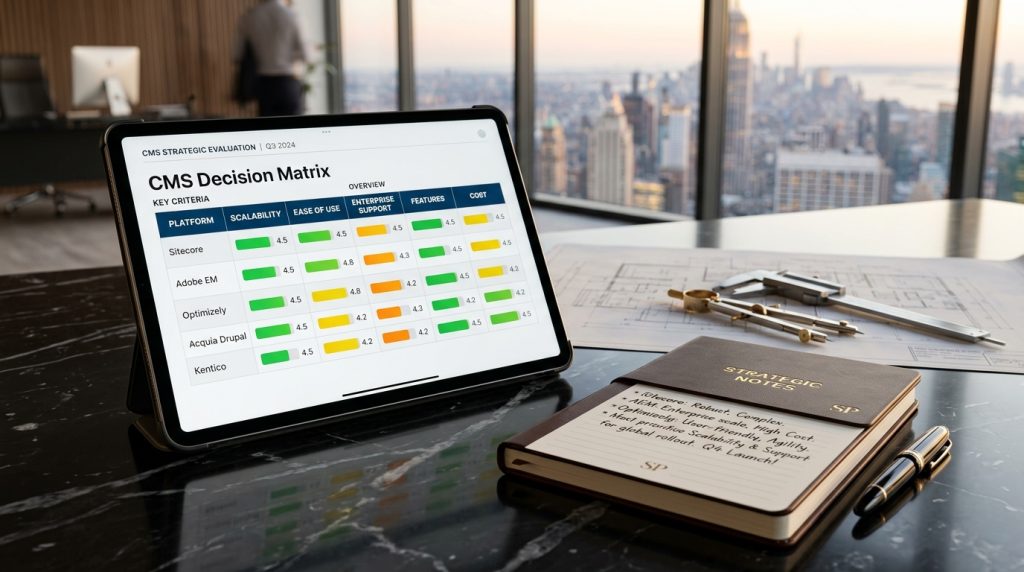
Platform Decision Matrix
Matching situations to platforms.
Small Business Marketing Site
Non-technical owner. Standard requirements. Modest budget.
Options: Wix, Squarespace, WordPress with managed hosting, Webflow with agency.
Recommendation depends on design importance and technical comfort.
Content-Focused Publication
Regular publishing. Multiple contributors. SEO priority. Growing audience.
Options: WordPress, Ghost, Contentful with modern frontend.
WordPress often wins for traditional publications. Ghost for subscription-focused. Contentful for sophisticated operations.
E-commerce Store
Online sales focus. Growing product catalog. Marketing and operations focus.
Options: Shopify, WooCommerce on WordPress, BigCommerce.
Shopify usually wins for most operations. WooCommerce for content-integrated stores.
Design-Focused Agency Site
Distinctive design. Portfolio focus. Client project showcases.
Options: Webflow, WordPress with custom theme.
Webflow often wins for pure design flexibility.
Enterprise Content Operation
Complex content structures. Multiple contributors. Sophisticated workflows. High traffic.
Options: Drupal, WordPress, Contentful.
Depends on specific needs. Drupal for complex structure. WordPress for ecosystem. Contentful for modern applications.
SaaS Product Marketing Site
Marketing site for software product. Content-driven. Integration with product.
Options: Webflow, WordPress, Contentful with modern frontend, custom development.
Depends on technical direction of company.
Community or Membership Site
Users interact. Content restricted by membership. Community features.
Options: WordPress with community plugins, custom development, specialized platforms.
WordPress often works with proper plugins. Complex community needs may exceed WordPress.
Cost Considerations
Understanding real costs.
Direct Platform Costs
Subscription fees. Hosting costs. Domain costs.
Ranges: $20-$500+ per month depending on platform and needs.
Development Costs
Building the site. Time cost of your team or paid developer fees.
Ranges: $500-$100,000+ depending on scope and platform.
Design Costs
Custom design if not using templates. Design work costs money.
Ranges: $500-$50,000+ depending on complexity.
Ongoing Costs
Plugins, apps, additional services. Ongoing maintenance and updates.
Often $50-$500 per month for ongoing needs.
Migration Costs
If you choose wrong, migrating later costs significantly. Factor in the possibility.
Ranges: $2,000-$50,000+ for meaningful migrations.
Total Ownership Over Three Years
Sum all costs. Compare across platform options. The cheapest annual cost may not be the cheapest three-year total.
Technical Requirements Assessment
Beyond features.
Performance Needs
How fast must the site load? SEO and conversion both benefit from speed. Some platforms are inherently faster than others.
Scalability Needs
Will traffic grow significantly? Some platforms scale better than others.
Integration Needs
Other systems the site must connect to. CRM. Email marketing. Analytics. Payment processing. Custom applications.
Security Requirements
Sites with sensitive data or high traffic need particular security attention.
Compliance Requirements
Regulatory requirements affect platform choice. Government compliance. GDPR. Industry-specific requirements.
Multi-Language Needs
International sites need proper multi-language support. Some platforms handle this better than others.
Team Capability Assessment
Match platform to team.
Non-Technical Business Owner
Should use Wix, Squarespace, or Shopify. Or hire agency for other platforms.
Do not try to force complex platforms without capability.
Small Business With Occasional Tech Help
WordPress with managed hosting works. Shopify. Squarespace. Simpler Webflow projects.
Growing Business With Marketing Team
WordPress. Shopify with apps. More sophisticated Webflow. Depending on focus.
Team With Designer
Webflow becomes viable. Custom WordPress themes. Design-focused platforms.
Team With Developer
Almost anything works. WordPress. Custom development. Headless CMSs. Complex platforms accessible.
Full Development Team
Any platform. Custom development. Headless architectures. Enterprise CMSs.
The Trial Approach
Before committing.
Free Trials
Most platforms offer free trials. Actually try them.
Small Test Project
Build a small test site. See how the workflow feels. Identify friction points.
Content Import Testing
Try importing sample content. See how well it transfers.
Team Feedback
Get feedback from actual team members who will use the platform. Their experience matters more than yours.
Client or Stakeholder Preview
If clients will use the platform, get their input. Their comfort matters.
Making the Final Decision
Bringing it together.
Weighted Requirements
Rank your requirements by importance. Some are must-haves. Others are nice-to-haves.
Platform Scoring
Score each platform option against your requirements. Which handles must-haves best?
Cost vs Value
The cheapest option is not always the best value. Consider what you get for what you pay.
Risk Assessment
What are the risks of each option? What is the recovery path if something goes wrong?
Team Consensus
The people who will use the platform should have input. Their engagement matters.
Written Decision
Document why you chose what you chose. Helps with future evaluation and prevents second-guessing.
Wrapping Up the Platform Selection
Choosing a CMS is not a decision to rush. The platform affects your business for years. Time invested in choosing well pays back through everything that follows.
For most businesses, honest evaluation of actual needs reveals the right platform. Marketing hype fades. Trends come and go. What matters is fit between platform capabilities and your specific requirements.
For businesses uncertain about their needs, spending time to clarify them matters more than jumping to platform evaluation. Requirements drive platform choice, not the other way around.
For teams working on platform decisions, involving the people who will use the platform produces better decisions than executive fiat. Their experience matters.
The website building market has more good options than ever. Almost every situation has multiple viable platform options. The right choice depends on specifics.
For most small businesses without technical capacity, hosted platforms like Wix or Squarespace serve well despite their limitations. The trade-offs are worthwhile for the accessibility.
For businesses with design priorities, Webflow deserves consideration. The design freedom is genuine.
For content-focused businesses, WordPress remains dominant for good reasons. The ecosystem and flexibility support content operations well.
For e-commerce focus, Shopify is usually the safe default with WooCommerce as WordPress-integrated alternative.
For publishers, Ghost offers focused capabilities that broader platforms cannot match.
For enterprise needs, Drupal, Contentful, and custom development provide capabilities general-purpose platforms lack.
For most projects, one platform is clearly right. The evaluation process reveals which one. If evaluation does not reveal a clear winner, either your requirements are unclear or multiple platforms are legitimately viable.
For businesses that have chosen well and are running successfully, focus on making the platform work rather than second-guessing the choice. Both success and struggle depend more on what you do on the platform than which platform you chose.
For businesses that chose poorly and are struggling, migration to a better-fitting platform may be worth the disruption. Not always. Sometimes fixing usage of current platform works. But sometimes the platform is genuinely wrong for the business.
Take the platform decision seriously. Invest time in evaluation. Match choice to actual needs and capabilities. Choose thoughtfully rather than reactively.
The platform becomes the foundation for your online business. Choose one that fits, and build well on top of it. Choose one that does not fit, and the friction affects everything for years.
For most businesses, the right choice is not the most popular platform or the newest one. It is the one that best serves your specific business, your specific team, and your specific goals. Take the time to identify which platform that is for you, then commit to building well on that platform. The right foundation supports whatever you build on top of it. The wrong foundation makes everything harder than it needs to be.