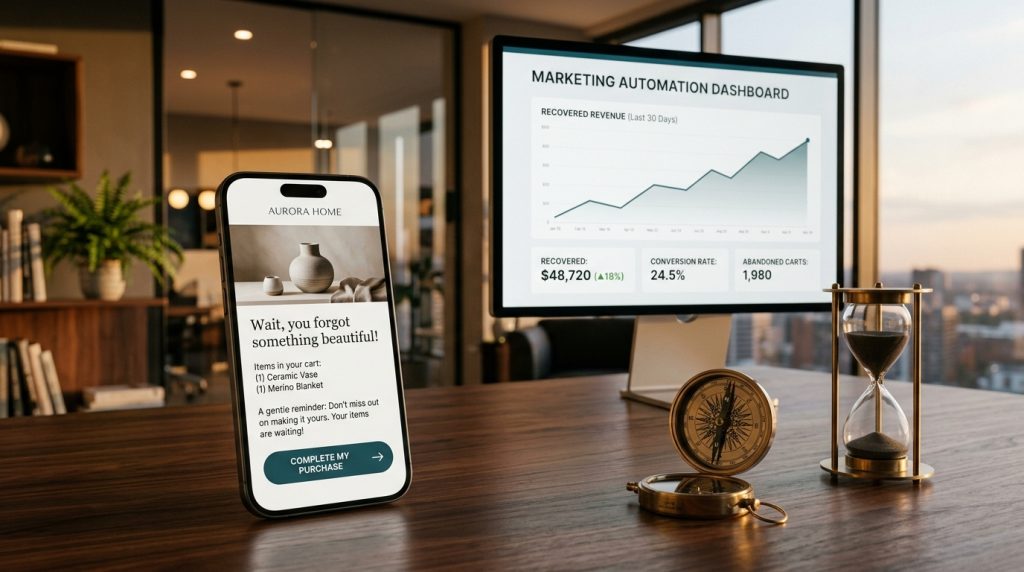
Cart abandonment is one of the most frustrating aspects of running an e-commerce store. Customers show real interest by adding products to their carts. Then they leave without buying. Industry averages put abandonment at around 70%. That means 7 out of 10 potential sales walk away at the finish line.
The good news is that some of those abandoned carts can be recovered. With the right approach, customers who left can be brought back to complete their purchases. Shopify includes tools for this. Additional tools extend the capabilities. The revenue recovered from abandoned carts is often significant.
This piece covers what abandoned cart recovery is, how to set it up in Shopify, and how to maximize the sales you recover from customers who almost bought.
Why Cart Abandonment Happens
Understanding the causes helps address them.
Unexpected Costs
Shipping. Taxes. Handling fees. Costs appearing at checkout that customers did not expect. Top reason for abandonment.
Complicated Checkout
Too many fields. Too many steps. Confusing process. Customers give up.
Account Required
Being forced to create an account before purchasing. Many customers leave rather than create accounts.
Concerns About Trust
Sites that seem unfamiliar or untrustworthy lose customers at the last step.
Just Browsing
Some customers use carts as wishlists or price comparison tools. They never intended to buy immediately.
Distractions
Something interrupted them. Phone rang. Boss walked in. Kid needed something. The purchase gets forgotten.
Payment Issues
Card declined. Payment method not accepted. Verification failed. Technical problems.
Second Thoughts
Real reconsideration about whether to buy. Not every abandonment can be recovered because sometimes the customer decided not to buy.
Comparison Shopping
Cart added at your store while comparing prices elsewhere. If they find better prices, they buy elsewhere.
How Abandoned Cart Recovery Works
The mechanism.
Capturing Contact Information
When customers start checkout, they typically provide contact information (usually email) before completing the purchase. Even if they abandon, you have their email.
Detecting Abandonment
Systems detect when someone started checkout but did not complete. The cart contents and customer information are captured.
Triggering Recovery Actions
Automatic emails go out to bring customers back. Some systems also use SMS, retargeting ads, or other channels.
Recovery Links
Recovery emails include links back to the customer’s cart. They can complete the purchase without recreating their selections.
Incentives
Recovery emails often include incentives to encourage completion. Discounts. Free shipping. Time limits.
Shopify’s Built-In Abandoned Cart Recovery
The platform includes basic functionality.
Where to Find It
Under Settings > Notifications, look for abandoned checkout emails. Under Marketing, check for abandoned checkout campaigns.
Automatic Emails
Shopify sends automatic emails to customers who abandon checkouts. Timing is configurable.
Customizing the Email
The default email templates can be customized. Add your branding. Adjust the message. Include specific incentives.
Cart Recovery Link
Emails include a link back to the cart. One click brings customers back to where they left off.
The Limits
Built-in functionality is basic. Single email. Limited customization. For serious recovery efforts, additional tools help.
Popular Cart Recovery Apps
Extended capabilities beyond built-in features.
Klaviyo
Email marketing platform with sophisticated abandoned cart automation. Multi-email sequences. Segmentation. Advanced customization.
Popular choice for stores serious about email marketing.
Omnisend
Similar to Klaviyo but often positioned as more accessible for smaller stores.
Handles abandoned carts plus other email marketing.
Privy
Focused on conversion tools including abandoned cart recovery.
CartHook
Specifically focused on cart recovery. Multiple email sequences. Sophisticated timing.
PushOwl
Uses browser push notifications to recover abandoned carts, in addition to or instead of email.
SMS Bump
Cart recovery via SMS. Higher open rates than email but higher friction.
The Right Choice
For most stores, Klaviyo or Omnisend covers cart recovery plus general email marketing. Combined tools work better than separate ones.
Effective Recovery Email Sequences
Multiple emails work better than single ones.
First Email (1-4 hours after abandonment)
Friendly reminder. “Did you forget something?” Just a nudge to return.
No incentive yet. Some customers just needed the reminder.
Second Email (24 hours later)
More direct. Emphasize the cart contents. Address common objections.
Possibly a small incentive or shipping offer.
Third Email (48-72 hours later)
Stronger incentive. Discount code. Free shipping. Time-limited offer.
This is often where the actual recovery happens.
Final Email (4-7 days later)
Last chance. Explain the offer is expiring. Create urgency.
Some stores send this. Others accept that abandoned this long, the sale is probably lost.
Recovery Email Best Practices
Making them work.
Personalization
Include the customer’s name. Reference specific products in the cart. Show product images.
Generic reminders perform worse than personalized ones.
Product Images
Show what they were about to buy. Visual reminders are effective.
Clear Call to Action
One primary action. Return to cart. Do not distract with other options.
Address Concerns
Common objections in abandonment emails. Trust signals. Money-back guarantees. Return policy.
Mobile-Optimized Design
Most emails get read on mobile. Design for mobile first.
Reasonable Subject Lines
Get the email opened. “You left something in your cart” works. Overly clever subject lines sometimes miss.
Appropriate Timing
Too soon feels pushy. Too late loses interest. First email within a few hours. Follow-ups over the next few days.
Testing
A/B test different approaches. Different email timing. Different incentives. Different messaging.
Incentive Strategies
What to offer.
Discount Codes
10% or 15% off the cart. Effective at recovering price-sensitive abandoners.
Do not offer discounts on the first email. Let some customers return without them.
Free Shipping
If not already free. Effective for customers who abandoned due to shipping costs.
Time-Limited Offers
Discount expires in 24 hours. Creates urgency.
Combined Offers
Free shipping plus a small discount. Higher perceived value.
Bundle Suggestions
Instead of discount, offer to add related products at a bundle price.
Product-Specific Deals
Different offers for different product categories. Higher discounts on categories with higher margins.
Balancing Recovery With Margins
Discounts recover sales but reduce margins. Balance the incentive against the sale value. Not every abandonment is worth recovering with a discount.
Retargeting for Abandoned Carts
Beyond email.
Facebook & Instagram Retargeting
Show ads to customers who abandoned carts. Meta Pixel enables this. Product-specific ads work well.
Google Retargeting
Similar approach through Google Ads. Shopping ads showing abandoned products.
Combining Channels
Email plus retargeting produces better results than either alone. Multiple touchpoints increase recovery.
Frequency Considerations
Do not overdo retargeting. Following customers around the internet obsessively creates negative brand associations.
SMS for Cart Recovery
Different channel with different characteristics.
Higher Open Rates
SMS gets opened more reliably than email. 90%+ open rates versus 20-30% for email.
Higher Friction
But customers often resist marketing SMS more than email. Opt-in matters more.
Legal Requirements
SMS marketing has specific legal requirements in most jurisdictions. Explicit opt-in required.
When SMS Works
For stores with strong customer relationships. For urgent time-limited offers. For high-value carts where recovery is worth extra effort.
When to Skip It
For stores without established SMS relationships. For general marketing that customers do not want as SMS.
Measuring Recovery Performance
Understanding what is working.
Recovery Rate
Percentage of abandoned carts recovered. Industry averages around 10-15% for well-run programs.
Recovery Revenue
Total revenue recovered from abandoned cart programs. Often 3-10% of total store revenue.
Email Performance
Open rates. Click rates. Conversion rates for each email in the sequence.
Segment Performance
How do different customer segments respond? New versus returning. Different product categories.
Attribution
Track which specific emails or ads led to recoveries. Improve what works. Cut what does not.
Common Recovery Mistakes
Stores stumble in predictable ways.
Not Setting Up Recovery
Missing this entirely. Losing sales that could be recovered.
Only One Email
Single reminder is better than nothing. Multiple email sequence is significantly better.
Incentivizing Too Fast
First email with big discount. Trains customers to abandon carts to get discounts.
Generic Messages
Templates that could be from any store. Personalization matters.
Ignoring Timing
Emails sent too fast or too slow. Both hurt performance.
Only Email
Missing retargeting and other channels that would add recovery.
No Testing
Same approach forever. Missing opportunities to improve.
Not Measuring
Running recovery without knowing what is working.
Too Aggressive
Bombarding customers with recovery messages. Damages brand relationship.
When Recovery Fails
Some carts do not recover.
The Reality
Not every abandoned cart can be recovered. Some customers genuinely decided not to buy. Some were just browsing. Some found the product elsewhere.
Recovery rates of 10-20% mean 80-90% of abandoned carts stay abandoned. This is normal.
Continuous Improvement
Even recovering 10% of abandoned carts is significant revenue. Improving to 15% is more. Keep testing and refining.
Attribution Considerations
Some customers would have returned anyway. Some sales attributed to recovery might have happened without it. This is difficult to measure precisely.
Wrapping Up the Cart Recovery Picture
Abandoned cart recovery is one of the higher-ROI activities in e-commerce. The customers are already interested. They already selected products. Bringing them back to complete the purchase is easier than acquiring new customers.
For most stores, Shopify’s built-in recovery is a starting point. It captures some sales that would otherwise be lost. But for serious recovery, dedicated tools like Klaviyo or Omnisend provide significantly better results.
The email sequences matter. Single reminders help. Multi-email sequences with escalating incentives work better. Testing what works for your specific customers refines the approach over time.
Beyond email, retargeting through paid ads captures more recoveries. SMS provides another channel for stores where it fits.
For stores without cart recovery currently, setting it up is a straightforward improvement with real revenue impact. The setup investment is bounded. The benefit continues for every abandoned cart from that point forward.
For stores with basic recovery running, upgrading to more sophisticated approaches often produces meaningful improvements. Better sequences. Better personalization. Better incentives. Better testing.
The compound effect of consistent recovery over time is significant. Small percentages of recovered carts across many months adds up to real revenue that would otherwise have been lost. This is not glamorous work but produces real results.
Take abandoned carts seriously. Set up recovery properly. Test what works for your customers. Keep improving over time. The customers who almost bought represent your most valuable recovery opportunity. Making the effort to bring them back completes sales that reflect the marketing and product work you already did to get them close to purchase. Every recovered cart is revenue that would have been lost. The math works out favorably for the stores that treat cart recovery as a real priority rather than an afterthought.