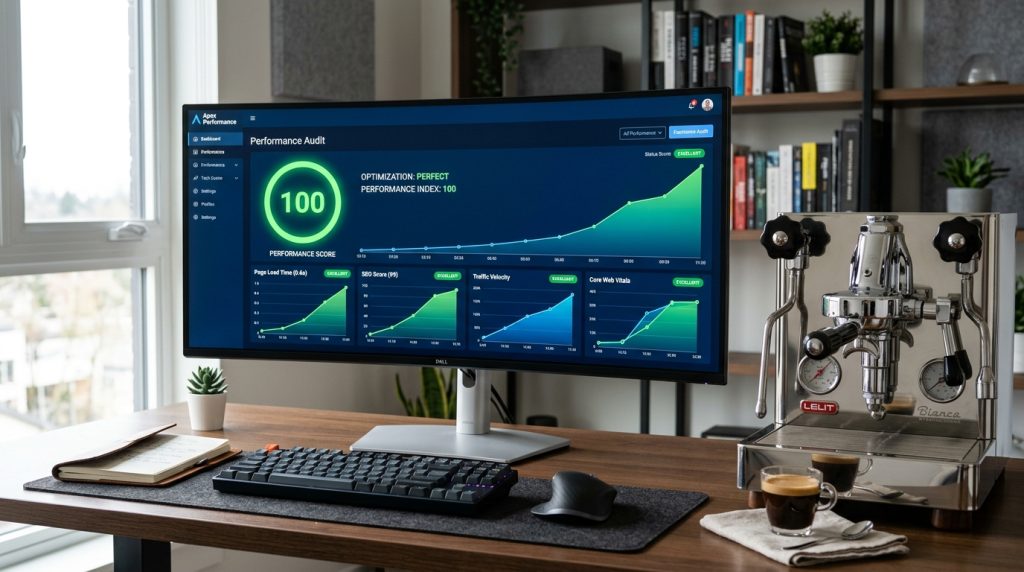
WordPress performance affects everything about a site. Search rankings. Conversion rates. User experience. Bounce rates. A slow WordPress site loses visitors, sales, and rankings. A fast one keeps them.
The good news is that WordPress performance is well-understood. The techniques that produce faster sites are documented. The tools are available. Sites that follow the practices are fast. Sites that ignore them are slow.
This piece covers the specific techniques that improve WordPress performance. Some are quick wins. Others require more work. Together they produce the difference between a fast site and a slow one.
Start With Good Hosting
The foundation matters more than anything else.
Why Hosting Matters
Every optimization you do runs on top of your hosting. Slow hosting means slow sites regardless of optimization work. Fast hosting makes everything else more effective.
Premium managed WordPress hosting from Kinsta, WP Engine, or similar providers gives your site a fast foundation. Budget shared hosting often does not.
When to Upgrade
If your site is slow and you have already optimized what you can, hosting is often the answer. Sites on cheap shared hosting frequently need to move to better hosting to reach acceptable speeds.
The earlier piece in this series covered WordPress hosting in detail.
Use a Caching Plugin
Caching provides one of the biggest performance improvements.
How Caching Helps
Cached pages get served without going through PHP and database. The response is dramatically faster than dynamic generation.
For most sites, caching cuts page load times significantly.
Which Plugin
WP Rocket for premium ease of use. LiteSpeed Cache for LiteSpeed servers. WP Super Cache for simple free caching.
Many managed hosts include caching. Do not add plugin caching on top of host caching unless you have a specific reason.
Optimize Images
Images are usually the biggest assets on pages.
Why Image Optimization Matters
Unoptimized images can be 10 times larger than necessary. Serving huge images to visitors wastes bandwidth and slows loading.
How to Optimize
Install an image optimization plugin like ShortPixel, Imagify, or Smush. Enable automatic optimization for uploads. Run bulk optimization on existing images.
Use modern formats like WebP where supported. Enable lazy loading so images below the fold do not load until visitors scroll to them.
Reduce Plugin Bloat
Every plugin adds load to your site.
The Problem
Sites accumulate plugins over time. Each one adds code that runs. Bloated plugin lists slow down sites.
The Solution
Audit your plugins periodically. Remove ones you no longer use. Replace heavy plugins with lighter alternatives when possible. Consolidate multiple plugins into single plugins where you can.
Aim for lean plugin lists focused on essentials.
Choose a Lightweight Theme
Themes affect performance significantly.
Fast Themes
Astra, GeneratePress, Kadence, and OceanWP are known for good performance. They provide flexibility without excessive code.
Themes with hundreds of features tend to be heavier than focused themes.
When to Switch
If your theme is slow and you have tried other optimizations, switching themes may help significantly. The switch is disruptive but can be worthwhile.
Use a Content Delivery Network
A CDN distributes content globally.
How CDN Helps
Visitors from anywhere in the world get files from a nearby edge location. This speeds up delivery significantly for global audiences.
Which CDN
Cloudflare offers a free tier that works well. Bunny.net, KeyCDN, and Amazon CloudFront are other options.
Configuration is usually straightforward. Most caching plugins integrate with CDNs.
Enable Browser Caching
Store files on visitors’ browsers.
The Benefit
Once a visitor has downloaded your CSS, JavaScript, or images, their browser can reuse the files on subsequent page views. No need to download again.
How to Enable
Caching plugins typically handle browser caching automatically. Verify it is enabled and configured with appropriate cache lifetimes.
Minify CSS & JavaScript
Reduce file sizes.
What Minification Does
Removes unnecessary characters (spaces, comments, line breaks) from CSS and JavaScript files. Smaller files transfer faster.
How to Enable
Caching plugins usually include minification options. Test after enabling to ensure nothing breaks.
Combine Files Where Possible
Reduce HTTP requests.
Why It Matters
Each file loaded requires an HTTP request. Fewer requests mean faster loading.
How to Combine
Some caching plugins combine multiple CSS files into one, or multiple JavaScript files into one. Test carefully because combining can sometimes break functionality.
Modern HTTP/2 makes this less critical than it once was, but combining still helps in many cases.
Optimize the Database
WordPress databases get bloated over time.
What Accumulates
Post revisions. Auto-drafts. Spam comments. Transients. Metadata from removed plugins. All accumulate over time.
How to Clean Up
WP-Optimize, Advanced Database Cleaner, or WP-Sweep handle database cleanup. Run cleanup monthly for active sites.
Limit post revisions in wp-config.php:
define(‘WP_POST_REVISIONS’, 5);
Use Object Caching
Speed up database queries.
How Object Caching Works
Stores frequently accessed database query results in memory. Subsequent requests get the cached result instead of running the query again.
Redis and Memcached are the two common object caches.
When It Helps
Object caching helps most on busy sites with lots of dynamic content. Static content sites benefit less from object caching.
Most premium hosts include Redis or Memcached. Configuration is usually minimal.
Update Everything
Current software runs better than old software.
What to Update
WordPress core. All plugins. Active theme. PHP version. Database version.
PHP Version Matters
Modern PHP versions (8.1+) are significantly faster than older ones (5.x, 7.0). Sites still on old PHP may see major performance improvements just from upgrading PHP.
Contact your host if your PHP version is old.
Disable Unnecessary Features
Turn off what you do not need.
WordPress Emojis
WordPress loads emoji support by default. Sites that do not use emojis can disable this and save some overhead.
Embed Support
WordPress loads scripts for auto-embedding content. Sites that do not use embeds can disable this.
XML-RPC
An old WordPress API that most modern sites do not need but attackers target. Disable if not needed.
REST API for Non-Logged-In Users
If your site does not need REST API access from non-logged-in users, restricting it can help.
Plugins like Perfmatters handle these optimizations easily.
Optimize Fonts
Fonts can slow down pages.
The Issue
Custom fonts (Google Fonts, Adobe Fonts) download separately and can delay page rendering.
Solutions
Use system fonts when possible. Host fonts locally instead of loading from Google. Preload critical fonts. Use font-display: swap to show fallback fonts while custom fonts load.
Reduce External HTTP Requests
Every external script slows down your site.
The Problem
Analytics scripts. Marketing pixels. Chat widgets. Ad networks. Each adds requests and delays loading.
The Solution
Audit external scripts. Remove ones you do not really need. Defer non-critical scripts. Load third-party scripts asynchronously where possible.
Enable GZIP Compression
Compress files before sending.
How It Helps
Compressed files transfer faster than uncompressed ones. GZIP typically reduces file sizes by 60-70%.
How to Enable
Most modern web servers enable GZIP by default. If yours does not, adding a few lines to .htaccess (Apache) or server config (Nginx) enables it.
Lazy Load Videos & iframes
Delay loading heavy embedded content.
The Benefit
YouTube videos, Twitter embeds, and iframes are heavy. Loading them lazily (only when visitors scroll to them) speeds up initial page load.
How to Enable
Many caching plugins and lazy load plugins handle iframe and video lazy loading.
Preload Critical Resources
Tell the browser what to load first.
How Preloading Works
Preload hints tell the browser to fetch critical resources early in the page load. Fonts, hero images, and critical scripts benefit from preloading.
How to Implement
Some caching plugins handle preloading. Others require manual configuration.
Monitor Performance Continuously
Track performance over time.
Tools to Use
Google PageSpeed Insights. GTmetrix. WebPageTest. Real user monitoring from your caching plugin or CDN.
What to Watch For
Performance drift over time. Sudden drops that indicate problems. Specific pages that lag behind others.
Regular monitoring catches issues before they become severe.
Test Before & After Changes
Verify optimization work.
The Discipline
Measure performance before making a change. Make the change. Measure again. Did it help?
Without measurement, you cannot tell what is working and what is not.
Specific Metrics
Page load time. Time to first byte. Largest contentful paint. Cumulative layout shift. First input delay.
Focus on the metrics that affect user experience and SEO.
Closing Thoughts on Speeding Up WordPress
WordPress performance is not magic. The techniques that produce fast sites are known. Following them produces results. Ignoring them produces slow sites.
For most sites, a few key improvements produce the majority of gains. Good hosting. Caching. Image optimization. Lean plugin list. Fast theme. These five alone produce dramatic improvements for sites that lack them.
Beyond the basics, the additional techniques provide incremental gains. Database optimization. Object caching. External script reduction. Font optimization. Each adds a bit of speed. Combined, they produce sites that load fast.
For sites without optimization currently, the potential improvement is often dramatic. Sites taking 5 seconds to load can often be brought down to 1-2 seconds with proper optimization.
For sites that have been optimized but could use additional improvements, the marginal gains from advanced techniques are worth pursuing. Every hundred milliseconds matter for conversion rates and search rankings.
Performance work compounds. Fast sites rank better in search. Better rankings bring more traffic. Traffic on fast sites converts better than traffic on slow sites. The compound effect over months and years is significant.
Sites that treat performance as an ongoing concern rather than a one-time project stay fast. Sites that optimize once and forget about it eventually slow down as content and plugins accumulate. The discipline of regular performance work keeps sites in the fast category rather than gradually joining the slow one. Take performance seriously, apply the techniques that work, and your WordPress site becomes a fast experience for visitors and a strong performer in search results.