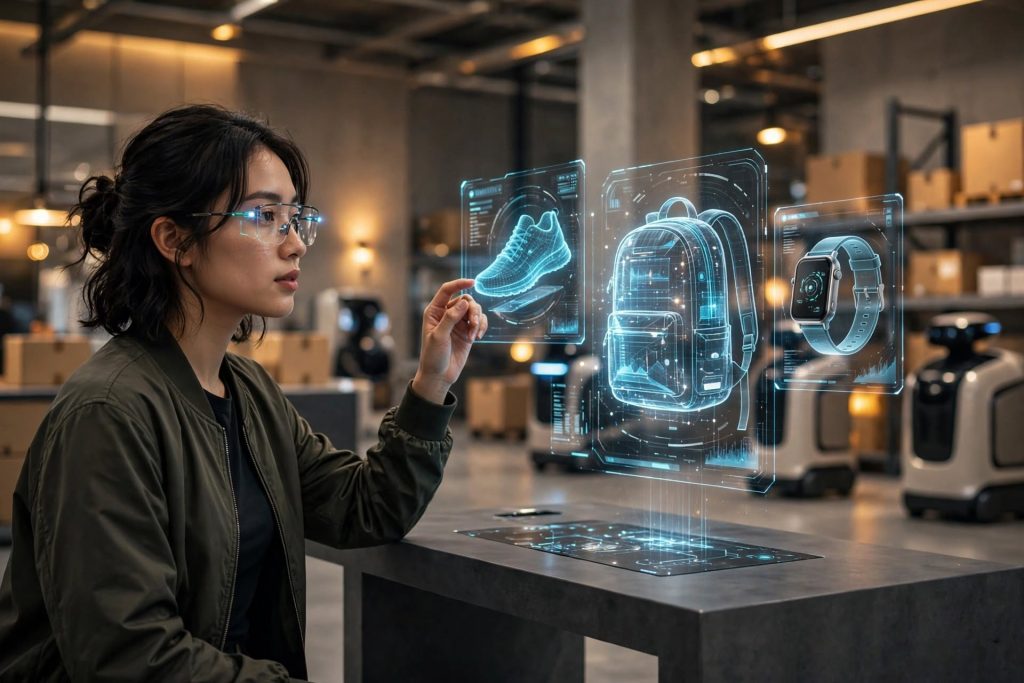
The e-commerce industry keeps moving. What felt cutting-edge two years ago is now expected. What is emerging now may become standard within a couple of years. For store owners trying to decide where to invest time and money, staying aware of trends helps allocate attention sensibly rather than either chasing everything or ignoring change until it forces action.
Not every trend matters for every store. Some apply broadly. Others fit only specific categories or customer types. Sorting the signal from the noise is more valuable than reading every trend piece and acting on none of them. What follows is a look at the trends worth actually thinking about in 2026 and what they mean for how you run your store.
AI Working Throughout the Stack
Not one trend but many.
AI-Powered Personalization
Sophisticated recommendation engines. Individual customer experiences driven by machine learning. Better than rule-based approaches.
AI Search
Search that understands intent, not just keywords. Voice input. Natural language queries. Visual search.
AI Customer Service
Chatbots that handle more sophisticated inquiries. Human agents focus on cases that really need them.
AI Content Generation
Product descriptions. Email campaigns. Ad copy. Faster production with human editing.
AI in Advertising
Meta and Google increasingly optimize campaigns automatically. Less manual campaign management. Advantage+ and similar systems.
AI Fraud Detection
Better detection with fewer false positives. Reduces both real fraud and legitimate transactions incorrectly blocked.
What It Means for Stores
AI is becoming infrastructure. Not a feature you buy but capability embedded in the tools you already use.
Stores do not need to build AI. They need to use AI-powered tools well.
Social Commerce Getting Serious
Buying where attention already lives.
Instagram Shopping
Shoppable posts, stories, reels. Purchase without leaving the app.
TikTok Shop
Growing quickly. Live shopping. Direct purchase from video content.
Facebook Shops
Cross-promoted with Instagram.
Pinterest Shopping
Shoppable pins. Visual discovery direct to purchase.
YouTube Shopping
Product tagging in videos. Features expanding.
Live Shopping
Real-time video with real-time purchase. Big in Asia. Growing in Western markets.
Creator Commerce
Influencers driving direct sales. Affiliate models maturing.
What It Means for Stores
Social commerce is not optional if your customers spend time on these platforms. Different platforms fit different products. Fashion, beauty, and home on Instagram. Younger audiences on TikTok. Inspiration-driven categories on Pinterest.
Augmented Reality for Product Visualization
Seeing before deciding.
Try Before Buying
Furniture in your room. Glasses on your face. Makeup on your skin. AR closes the visualization gap.
iOS AR Adoption
Apple’s ARKit drives adoption on iPhone.
Android AR
Growing but variable across devices.
Web-Based AR
WebAR removes the app requirement. Customers use AR through the browser.
Category Fit
Furniture. Home decor. Eyewear. Cosmetics. Fashion accessories. Not universal.
Return Reduction
Customers who used AR to visualize before buying return less. Real economic benefit.
Investment Reality
AR takes work. 3D models for products. Setup effort. For categories where it fits, the returns justify the work.
Voice Commerce
Buying through voice interfaces.
Smart Speaker Shopping
Amazon Echo, Google Home. Growing but not dominant.
Voice Search on Phones
Voice search common. Query patterns differ from typed search.
Content Optimization for Voice
Product content structured for voice queries.
Voice Assistant Discoverability
Products found through voice assistants.
Current State
Voice commerce grows but has not dominated. Realistic expectations matter.
What It Means for Stores
Optimize for voice search. Do not overinvest in voice-only strategies.
Sustainability & Values-Driven Buying
Customers who care.
Sustainability Focus
Environmental impact matters to more customers. Especially younger ones.
Ethical Sourcing
Transparency about sourcing. Fair labor. Real environmental responsibility.
Packaging Reduction
Less packaging. Recyclable materials.
Carbon Neutral Shipping
Some stores offset shipping emissions. Marketing point.
Certifications
B Corp. Fair Trade. Third-party validation.
Real vs Marketing
Customers detect greenwashing. Authentic commitment matters. Fake commitment backfires.
What It Means for Stores
Genuine sustainability improvements make sense where you can make them. Marketing without substance is a risk. Know your specific audience.
Buy Now Pay Later Matured
Now standard.
Standard Expectation
Klarna, Afterpay, Affirm all mainstream. Customers expect the option.
Regulatory Attention
Rules evolving in various jurisdictions. Watch this.
Deeper Integration
BNPL more integrated into checkout experiences.
Broad Adoption
Not just younger customers anymore.
Merchant Economics
Fees higher than credit cards. Usually offset by higher conversion and larger orders.
What It Means for Stores
BNPL is table stakes for most stores. Its absence hurts conversion.
Fast Delivery Expectations
Amazon set the bar.
Prime Impact
Same-day delivery in major markets. Sets the expectation.
Local Fulfillment
Partnering with local fulfillment for fast delivery.
Store as Warehouse
Physical stores becoming fulfillment centers for local delivery.
Delivery Services
DoorDash and Uber expanding beyond food. Same-day for various products.
Cost Reality
Fast delivery is expensive. Balance with economics.
Category Relevance
Groceries and urgent needs benefit most. Other categories less so.
What It Means for Stores
Match customer expectations for your specific category. Not every store needs same-day.
Composable Commerce
Modular architecture.
What It Is
Building the store from best-of-breed components. Not one monolithic platform.
Headless Approach
Backend separated from frontend. More flexibility.
API-First Everything
Services accessed through APIs. Modular composition.
When It Fits
Larger operations with technical resources.
When Traditional Platforms Fit
Most small to mid-sized stores stay with traditional platforms.
What It Means for Stores
Aware without necessarily adopting. Depends on scale and technical capability.
Subscription Model Evolution
Beyond simple boxes.
Established Category
Subscription e-commerce is mature. Multiple proven models.
Access-Based Subscriptions
Subscribe for access rather than delivery. Different value proposition.
Personalized Subscriptions
AI-driven curation. Each box different from others.
Subscription Fatigue
Some customer resistance to too many subscriptions. Real consideration.
Hybrid Models
Combining subscription with one-off purchases.
What It Means for Stores
Subscription works for the right products. Not a universal solution.
Marketplace Dynamics
Multi-vendor commerce continues.
Established Marketplaces
Amazon, eBay, Etsy dominate specific categories.
Vertical Marketplaces
Category-specific marketplaces growing.
Direct-to-Consumer Response
DTC brands maintaining independent stores while also selling on marketplaces.
Amazon Competition
Amazon’s dominance affects competitive dynamics for stores selling there and competing with it.
Marketplace as Discovery
Some brands use marketplaces to find customers, then move them to owned channels.
What It Means for Stores
Marketplace strategy depends on category and brand approach. No single right answer.
Video Content Everywhere
Video reshapes commerce.
Short-Form Video
TikTok, Reels, Shorts. Dominant for younger audiences.
Live Video Commerce
Live shopping streams growing.
Product Video Standard
Product videos on product pages becoming expected.
User-Generated Video
Customer video content valuable. UGC campaigns expanding.
Production Accessible
Smartphone video production is real. Not requiring professional teams for everything.
What It Means for Stores
Video capability increasingly required. Not optional for most stores.
First-Party Data Ascendance
Privacy environment shifts.
Cookie Deprecation
Third-party cookies phasing out in browsers. Affects tracking and advertising.
First-Party Data More Valuable
Your customer data becomes more valuable. Email lists. Purchase history. Direct relationships.
Zero-Party Data
What customers explicitly tell you. Preferences. Wishes. Feedback.
Consent-Based Marketing
Privacy regulations require consent. Marketing built on consent.
Data Infrastructure
Better systems to use first-party data well.
What It Means for Stores
Invest in your email list. Build direct customer relationships. Collect data with consent.
Personalization at Scale
Individual experiences for everyone.
Beyond Basic Personalization
Not just “Hi Name.” Actually different experiences based on customer data.
AI-Powered
Machine learning enabling scale.
Cross-Channel Coordination
Personalization across email, ads, and site.
Predictive
Predicting what customers want before they ask.
Privacy Balance
Personalization needs data. Privacy concerns are real.
What It Means for Stores
Basic personalization is now common. Advanced personalization becomes competitive advantage.
Cross-Border Growth
International expansion.
International Sales Growing
Cross-border e-commerce continues expanding.
Multi-Currency
Currency conversion built into platforms.
Localized Experiences
Not just translation. Cultural adaptation.
International Shipping
Services making cross-border shipping more accessible.
Local Payment Methods
Regional payment methods matter for international expansion.
What It Means for Stores
International opportunities for many stores. Requires investment to serve properly.
Retail Media Networks
Advertising on retail sites.
What They Are
Retailers selling advertising space to brands. Amazon Ads. Walmart Connect.
Growing Ad Spend
Brand budget shifting to retail media. High-intent audiences.
Marketplace Seller Reality
Sellers on marketplaces increasingly need advertising to be found.
What It Means for Stores
For stores selling through marketplaces, advertising becomes essential.
Mobile Wallet Payment Growth
Continued expansion.
Apple Pay & Google Pay
Mainstream. Standard checkout option.
Regional Wallets
Different regions have different dominant wallets.
Cryptocurrency
Some stores accept it. Niche but present.
What It Means for Stores
Mobile wallet support is standard now. Regional considerations matter for international operations.
Retention Getting More Attention
Beyond acquisition.
Rising Acquisition Costs
Cost of acquiring customers keeps climbing across channels.
Retention Economics Improve
Keeping customers becomes relatively more attractive.
Loyalty Program Maturation
Sophisticated loyalty programs. Points. Tiers. Exclusive access.
Community Building
Communities around brands. Deep engagement beyond transactions.
What It Means for Stores
Balance acquisition and retention investment. Sometimes retention produces better ROI than more acquisition spend.
Choosing Which Trends to Actually Act On
Trends keep coming. Some become standard. Others fade. Predicting which specific ones will matter most for your specific store is difficult and not really necessary. Focusing on fundamentals produces better results than chasing everything.
For most stores, mastering the basics matters more than adopting every trend. Great products. Fair prices. Clear communication. Effective marketing. These remain the foundation regardless of what changes on the periphery.
For stores that have the fundamentals working, selectively adopting trends that fit their specific business produces additional gains.
AI integration is essentially not optional anymore. AI is becoming embedded in the tools stores already use. The choice is not if you use AI but which AI-powered tools to adopt.
Social commerce matters based on where your audience spends time. If your customers use Instagram or TikTok, participate. If they do not, do not force it.
Mobile keeps growing. Mobile optimization is not optional. Already essential.
BNPL is standard. Digital wallets are standard. Great photography and video are standard. Trust signals are standard. These trends became foundation.
Advanced trends like AR, voice commerce, and composable commerce affect specific stores. Evaluate based on your category and customers.
Sustainability matters more for some segments. Authentic commitment matters. Fake commitment backfires.
Privacy keeps shifting. First-party data grows more valuable. Direct customer relationships pay back.
International opportunities exist but require investment. Not every store needs to go international.
Customer expectations keep rising. What was above and beyond becomes expected. Meeting rising expectations requires ongoing improvement.
For stores building for the long term, invest in capabilities that stay valuable across specific trend cycles. Customer data infrastructure. Content production capability. Team skills. These serve regardless of which specific trends dominate.
For stores chasing every new thing, effort scatters and nothing gets deep enough to produce results. Focus on trends fitting your business.
For stores ignoring change entirely, they gradually fall behind. The market moves forward. Stationary stores fall behind.
The balance between trend awareness and fundamentals focus matters. Trends inform strategic direction. Fundamentals produce daily results.
For stores evaluating specific trends, consider fit to your business. Not every trend applies. Selective adoption beats blanket adoption.
What Actually Deserves Attention in 2026
If you can only focus on a few things this year, focus on these. AI-powered tools where they fit your operation. Mobile experience at every level. First-party data collection and email list growth. Social commerce presence on the platforms your customers actually use. Great product content including photography and video. Everything else can wait or come later.
That focused list does not include every trend but does include the ones with the broadest applicability and clearest value. Master these, and you position yourself well for whatever specific trends emerge over the next couple of years.
The e-commerce environment will keep changing. Businesses that adapt while maintaining excellence in fundamentals grow through changing conditions. Businesses that neglect either fundamentals or evolution struggle. Choose the balanced path. Do the daily work of running an excellent store. Selectively adopt what genuinely fits. Build capabilities that stay valuable across whatever comes next.
That combination of consistency and selective adaptation is what supports sustainable growth in an industry that keeps evolving. Prepare for change while doing the daily work that matters, and your store can grow through whatever specific trends turn out to shape the years ahead. The stores that thrive are not the ones that predicted the future correctly. They are the ones that built strong foundations and adapted intelligently as the future arrived. That approach stays available to any store willing to commit to both parts of the equation over the long term.